
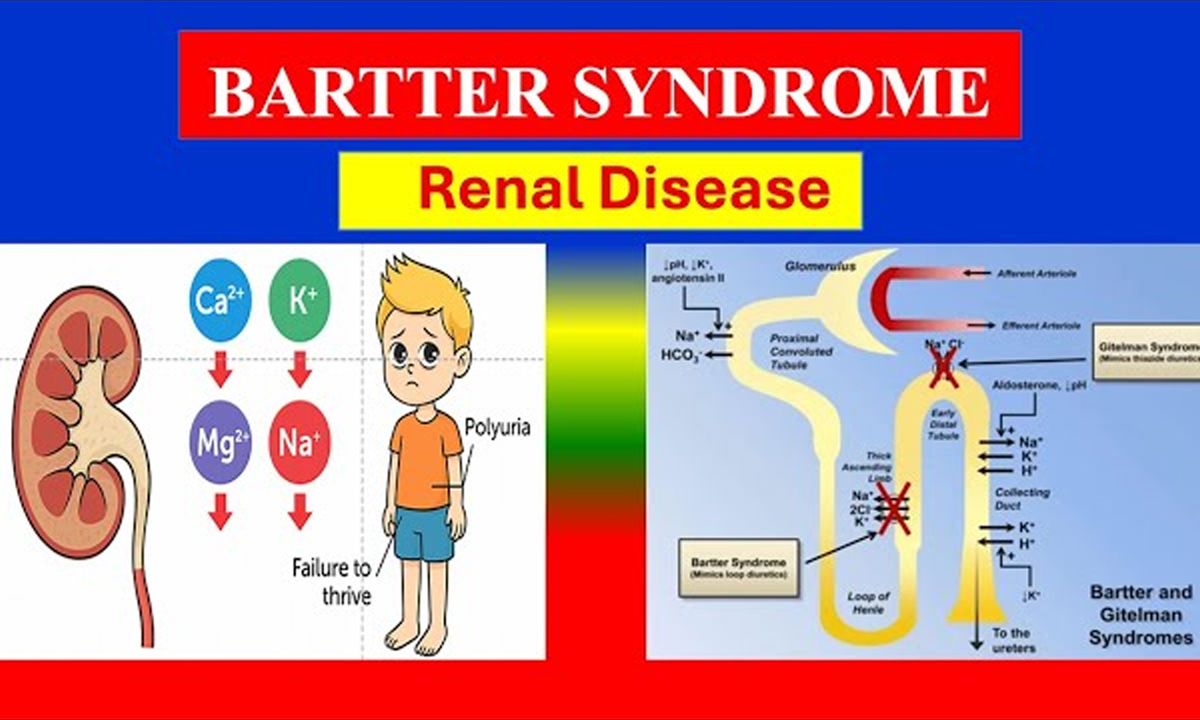
Bartter Syndrome is a rare inherited renal tubular disorder that affects the kidneys’ ability to reabsorb electrolytes, particularly sodium, chloride, and potassium. This defect primarily occurs in the thick ascending limb of the loop of Henle, a specialized region that plays a significant role in maintaining electrolyte balance. As a result, affected individuals experience excessive loss of salts in the urine, leading to dehydration, low potassium levels (hypokalemia), metabolic alkalosis, and increased renin and aldosterone production.
Bartter Syndrome is classified into various types based on the underlying genetic mutations and severity. The two broad categories are antenatal Bartter syndrome, which presents before birth or soon after delivery, and classic Bartter syndrome, which appears in early childhood. Antenatal forms are more severe and often associated with polyhydramnios, premature birth, and early-life salt-wasting crises. Classic Bartter syndrome manifests with symptoms such as frequent urination, excessive thirst, muscle weakness, growth retardation, and episodes of dehydration.
The hallmark features include persistent hypokalemia, increased urinary calcium excretion, metabolic alkalosis, and normal to low blood pressure despite high renin and aldosterone levels. Children with Bartter Syndrome often face growth challenges due to chronic electrolyte imbalance. Some patients may develop nephrocalcinosis due to high calcium levels in urine. The condition can also cause constipation, fatigue, and muscle cramps.
Diagnosis involves evaluating blood electrolytes, measuring urine electrolyte losses, assessing renin and aldosterone levels, and in certain cases, conducting genetic testing to identify specific gene mutations. Early identification is important for initiating appropriate treatment and preventing complications such as kidney damage or growth delays.
Treatment focuses on minimizing electrolyte loss, correcting potassium deficiency, and reducing prostaglandin production, which is often elevated in Bartter Syndrome. Medications such as potassium supplements, sodium chloride, and non-steroidal anti-inflammatory drugs (NSAIDs) like indomethacin may be used to improve electrolyte balance. In some cases, magnesium supplementation is required due to associated magnesium loss. Ensuring adequate hydration is crucial to avoid dehydration episodes.
With proper and consistent treatment, children with Bartter Syndrome can experience improved growth and reduced symptoms. Long-term monitoring is essential to track kidney function, electrolyte balance, and growth parameters. Although there is no cure, management strategies significantly help stabilize the condition and support a normal lifestyle.