
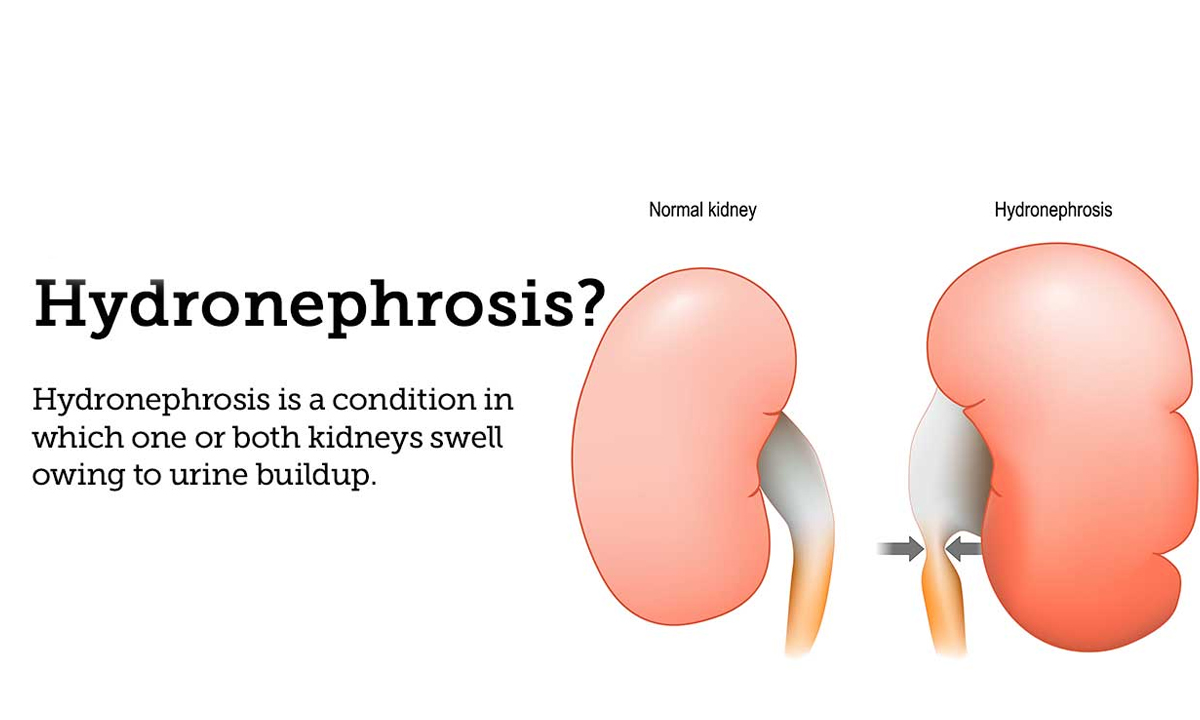
Congenital Anomalies of the Kidney and Urinary Tract (CAKUT) represent a group of structural abnormalities present at birth that affect how the kidneys and urinary system develop. One of the most common conditions under this category is hydronephrosis, a condition in which urine flow is blocked or slowed, causing swelling of the kidney. Early detection and timely treatment are essential to protect kidney function and prevent long-term complications.
Hydronephrosis may occur due to several reasons, such as Ureteropelvic Junction (UPJ) Obstruction, Vesicoureteral Reflux (VUR), Posterior Urethral Valves (PUV), or narrowing of the urinary tract. It is often detected during pregnancy through routine antenatal ultrasound, allowing doctors to closely monitor the baby’s kidney development even before birth.
In most mild cases, hydronephrosis improves naturally as the child grows. For such cases, doctors recommend regular follow-up with ultrasound scans to monitor the condition. No active treatment is needed unless symptoms worsen. When urinary infection is a risk, pediatricians may prescribe low-dose prophylactic antibiotics to prevent recurrent infections that can damage developing kidneys.
For moderate to severe hydronephrosis, or when kidney function is affected, further evaluation is done using tests like Renal Scan (MAG3/DTPA), MCU, or MRI Urography. These tests help determine the exact cause and severity of obstruction.
If a blockage is confirmed, treatment focuses on restoring smooth urine flow. The most common surgical approach for UPJ obstruction is pyeloplasty, a procedure in which the narrowed segment of the ureter is removed and the healthy part is reattached. Modern techniques, including laparoscopic or robotic pyeloplasty, offer excellent outcomes with minimal pain, faster recovery, and smaller scars.
In conditions like Vesicoureteral Reflux, treatment ranges from observation, antibiotic prophylaxis, to endoscopic injection and in severe cases, reimplantation surgery to correct the faulty valve mechanism.
For Posterior Urethral Valves, which occur only in boys, early intervention with endoscopic valve ablation is essential to relieve obstruction and protect kidney function.
The goal of hydronephrosis treatment is to preserve kidney function, prevent infections, and ensure normal urinary drainage. With timely intervention, most children lead completely healthy lives without long-term complications.